Mixtape Review: Growing Up Never Felt This Sad
Mixtape understands something most games forgot
Mixtape released this week on PS5, Xbox Series X|S, PC, and Nintendo Switch 2, and honestly, I haven't really stopped thinking about it since the credits rolled.
Not because of the review scores. Not because of the soundtrack either.
Because this game understands what growing up before phones felt like.
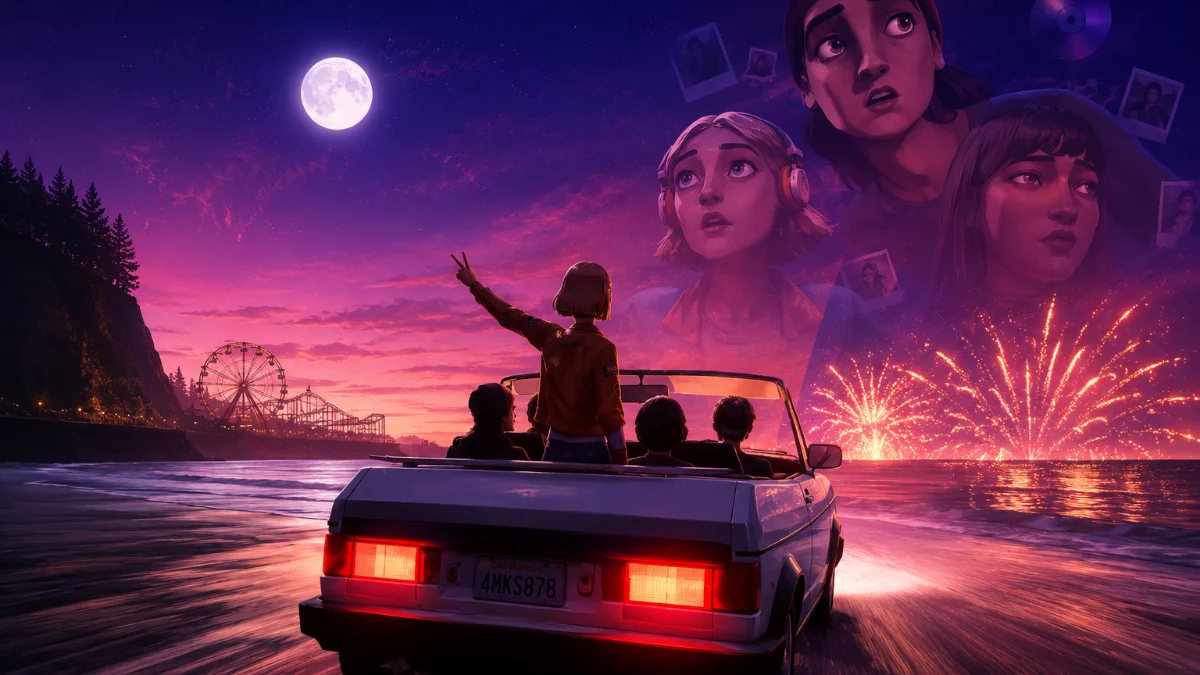
Sitting on cars. Wandering parking lots. Listening to the same CD for weeks because it was the only thing in the glovebox. Getting bored with your friends, then somehow turning boredom into the greatest night of your life.
That feeling sits inside every second of Mixtape.
Developed by Beethoven & Dinosaur and published by Annapurna Interactive, this is the follow-up to The Artful Escape. Instead of psychedelic space opera nonsense, Mixtape keeps things grounded in late-90s Northern California.
Mostly.
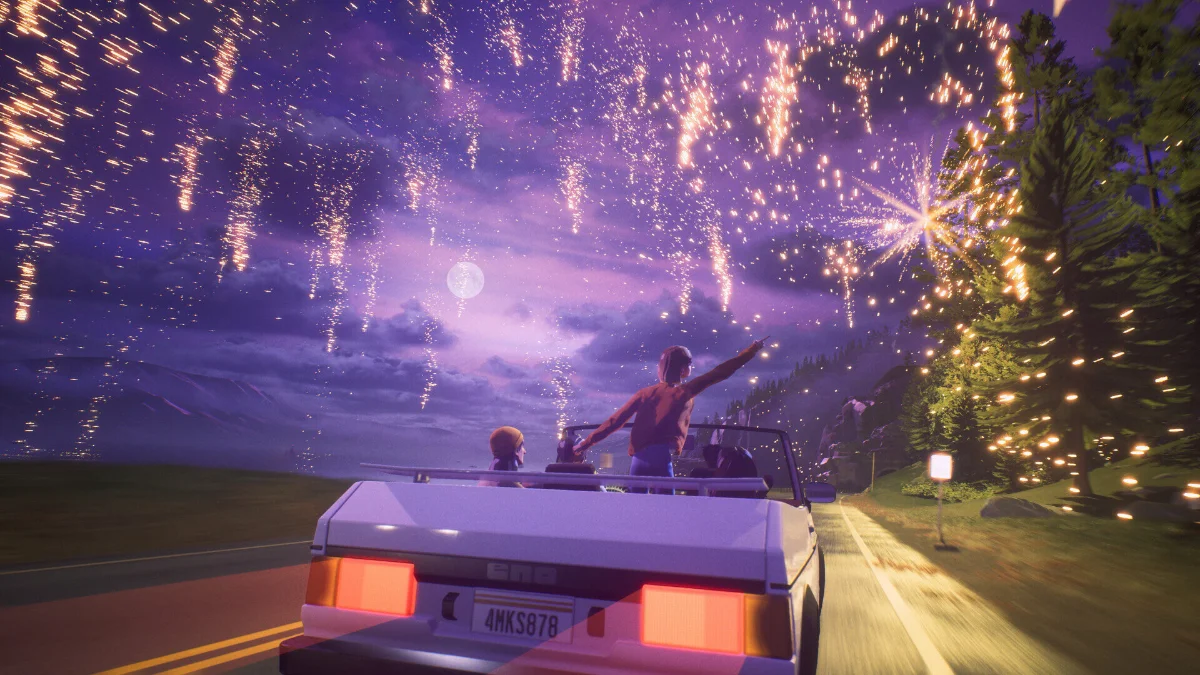
Then it starts throwing shopping-cart police chases, exploding cars, dream sequences, awkward tongue minigames, and surreal teenage fantasies at you like somebody turned old memories into playable music videos.
And weirdly, it works.
What is Mixtape actually about?
The setup is simple.
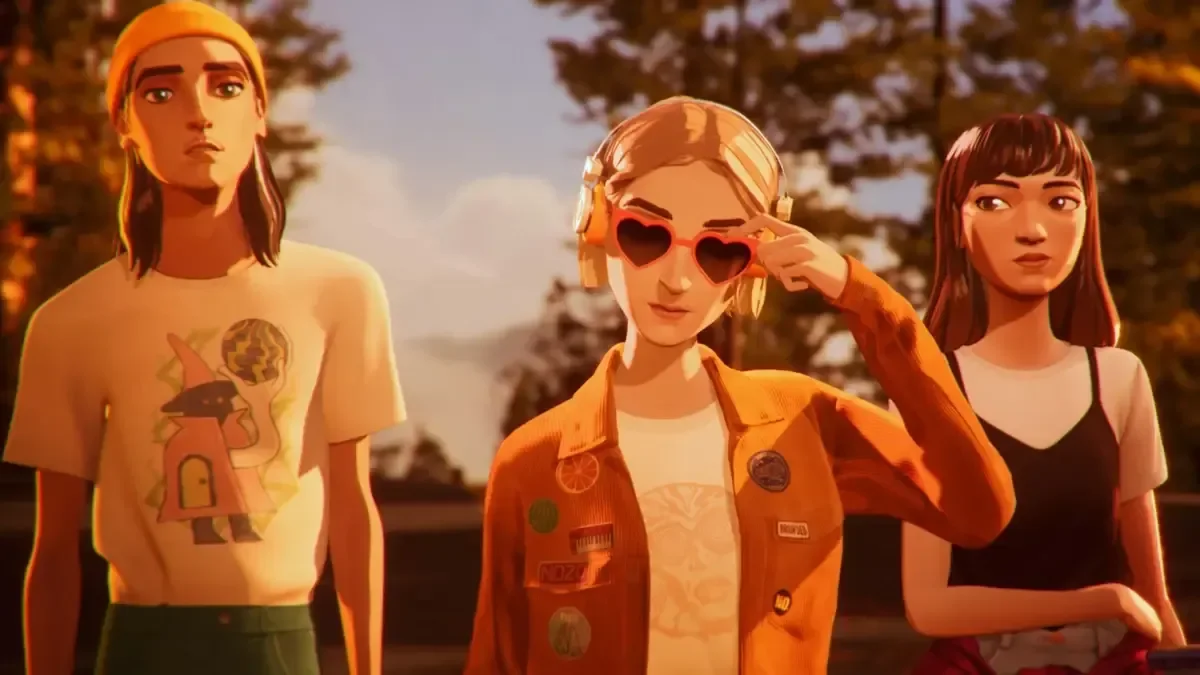
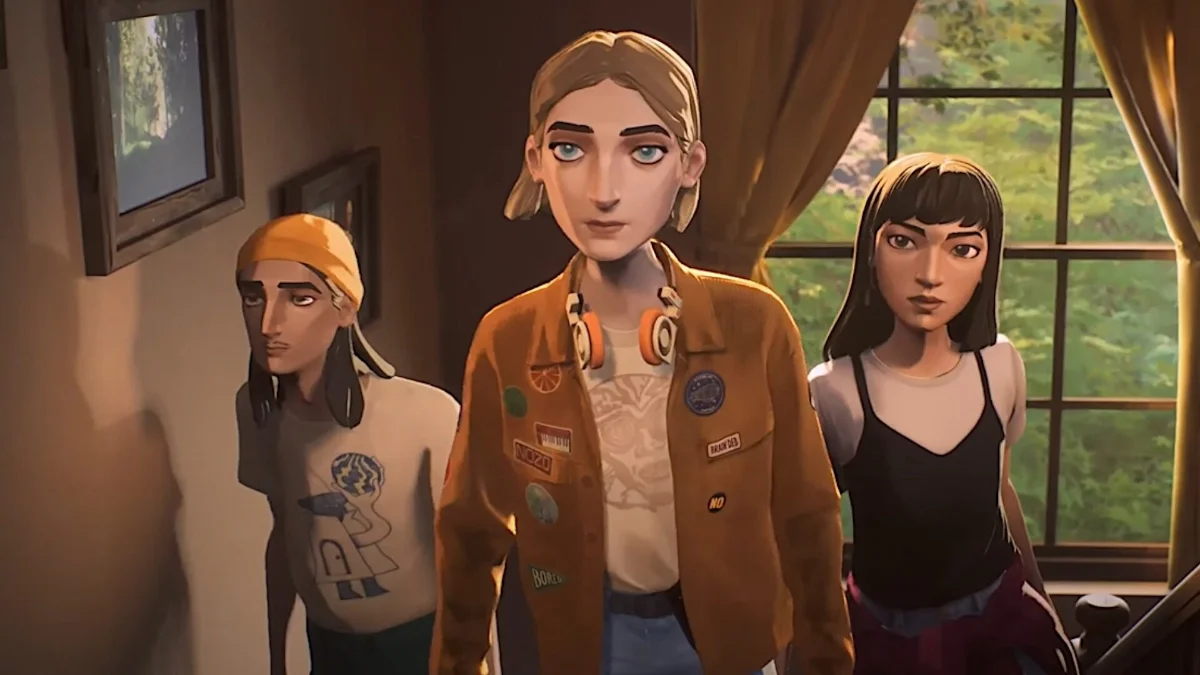
Three friends spend their final night together before adulthood starts dragging them in different directions.
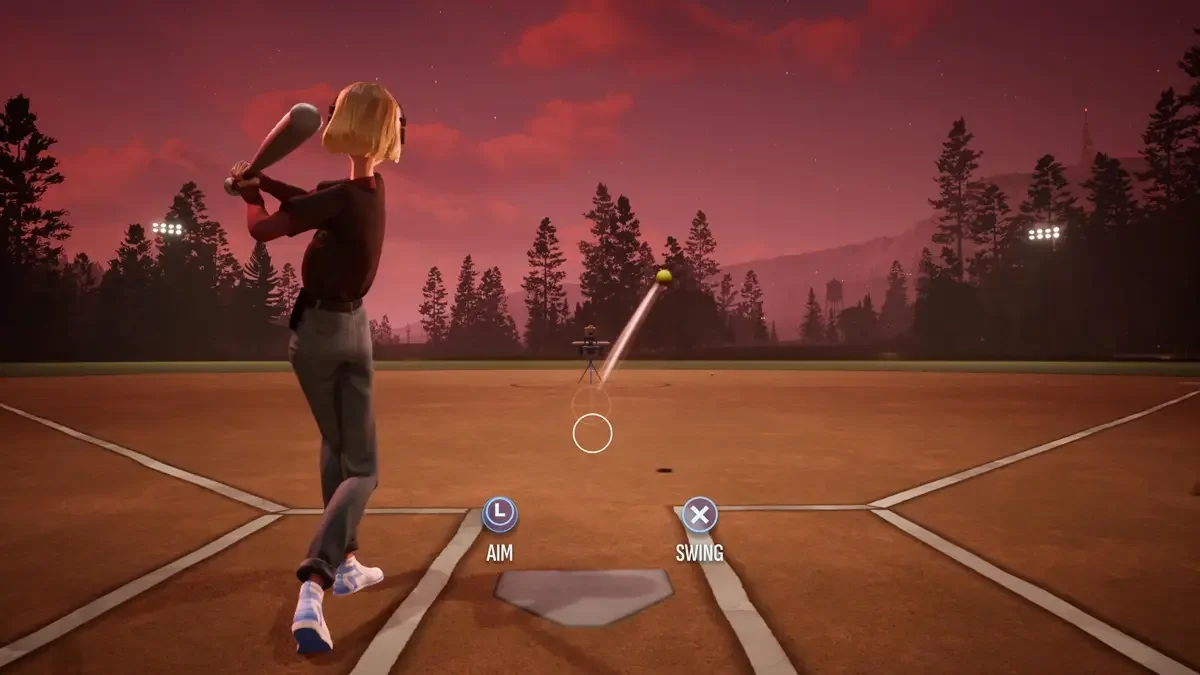
Rockford wants to leave town for New York and chase a music career. Slater drifts through life with burnout philosopher energy. Cassandra hides years of pressure beneath softball trophies and forced perfection.
One huge graduation party waits at the end of the night.
Every song on Rockford's homemade mixtape triggers a playable memory from their teenage years, and the game constantly jumps between tones in ways that feel chaotic but strangely authentic.
One minute you're skating downhill while Smashing Pumpkins blasts through your headphones. The next, you're steering a shopping cart across a highway while your unconscious friend rattles around inside like unsecured IKEA furniture.
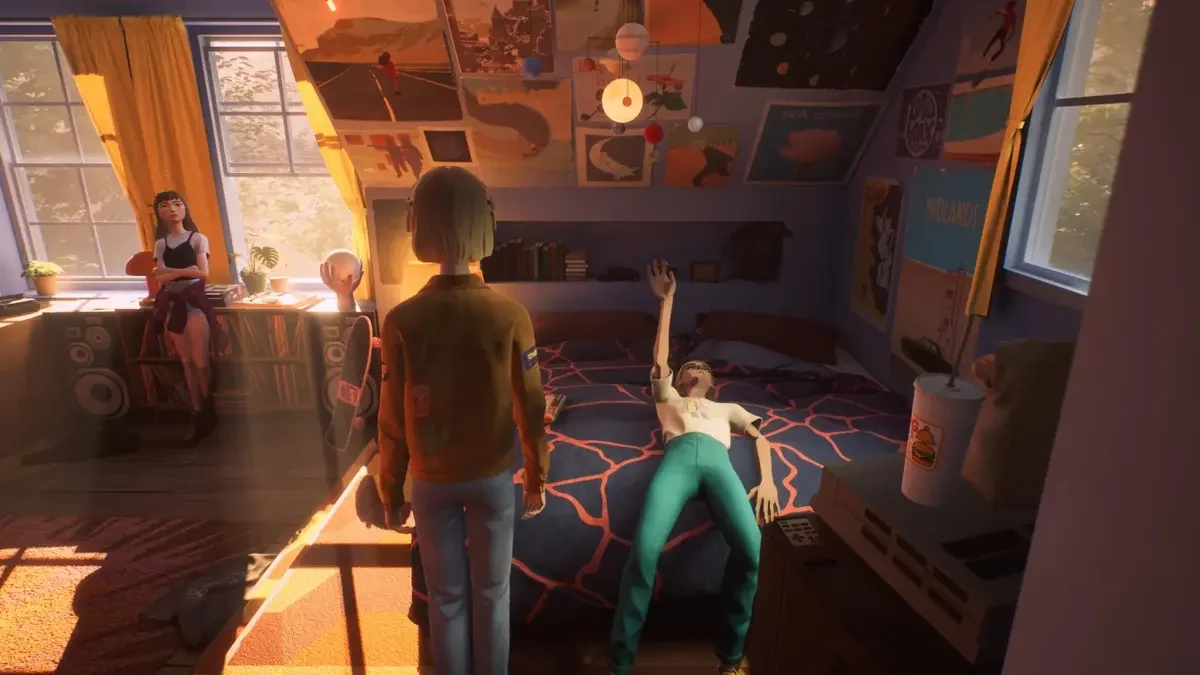
Then suddenly the game slows down and lets you quietly explore a bedroom full of CDs, posters, scratched-up magazines, and tiny details that tell you everything about these characters.
I think that's why the game lands emotionally.
Mixtape understands that teenage memories rarely replay in clean chronological order. They crash together. Songs trigger random moments. Embarrassment sits next to joy. Tiny events feel world-ending.
This game gets that.
Why the soundtrack hits so hard
A lot of games use licensed music as nostalgia bait.
Mixtape builds entire scenes around its songs.
That's the difference.
Tracks from Joy Division, Portishead, Devo, The Cure, Silverchair, Iggy Pop, and Siouxsie and the Banshees don't just sit quietly in the background. The music shapes the pacing, editing, lighting, and gameplay itself.
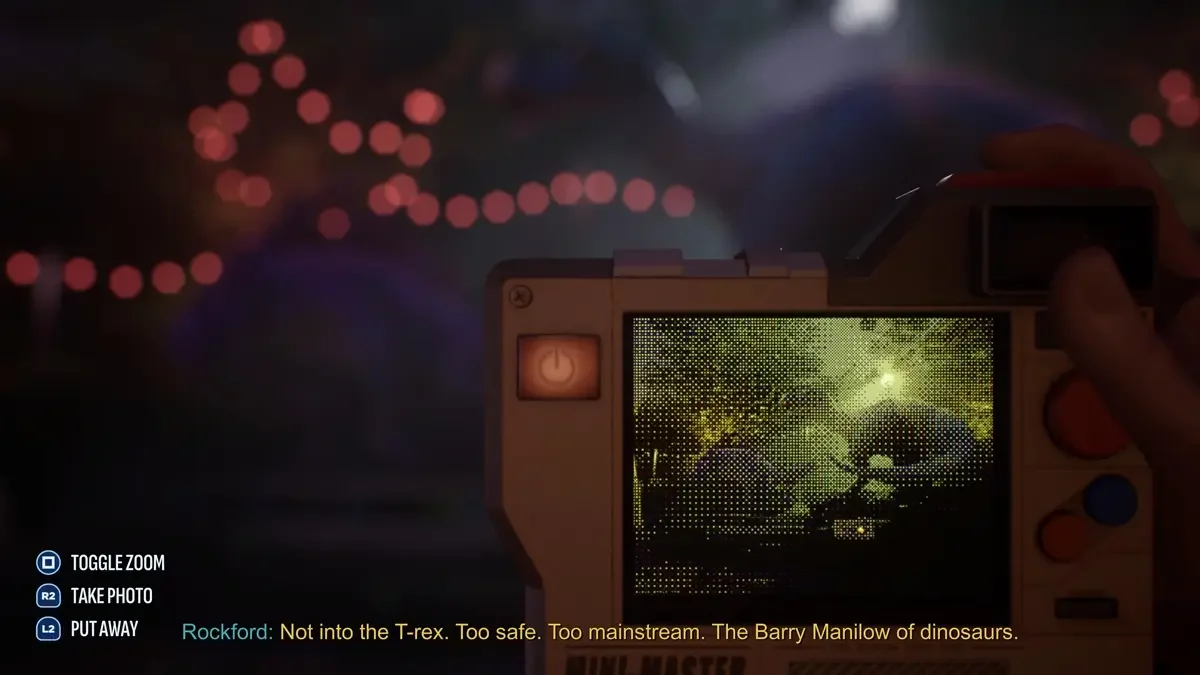
Rockford introduces tracks directly to the camera like she's recording her own documentary. Sometimes it's funny. Sometimes painfully pretentious (exactly like a teenager who just discovered alternative music and suddenly thinks every lyric contains the meaning of life).
But the sincerity sells it.
One skateboarding sequence set to Smashing Pumpkins genuinely gave me that strange chest-tightening nostalgia feeling people usually exaggerate online.
And this is the part I think most reviews are circling around without fully saying outright:
Mixtape feels less nostalgic than haunted.
Not haunted in a horror sense.
Haunted by versions of yourself that don't exist anymore.
That's why people in their late 20s, 30s, and 40s are connecting with it so hard.
The game isn't really about the 90s.
It's about realizing certain summers never happen again.
Why everyone compares it to Spider-Verse
The visual style immediately stands out.
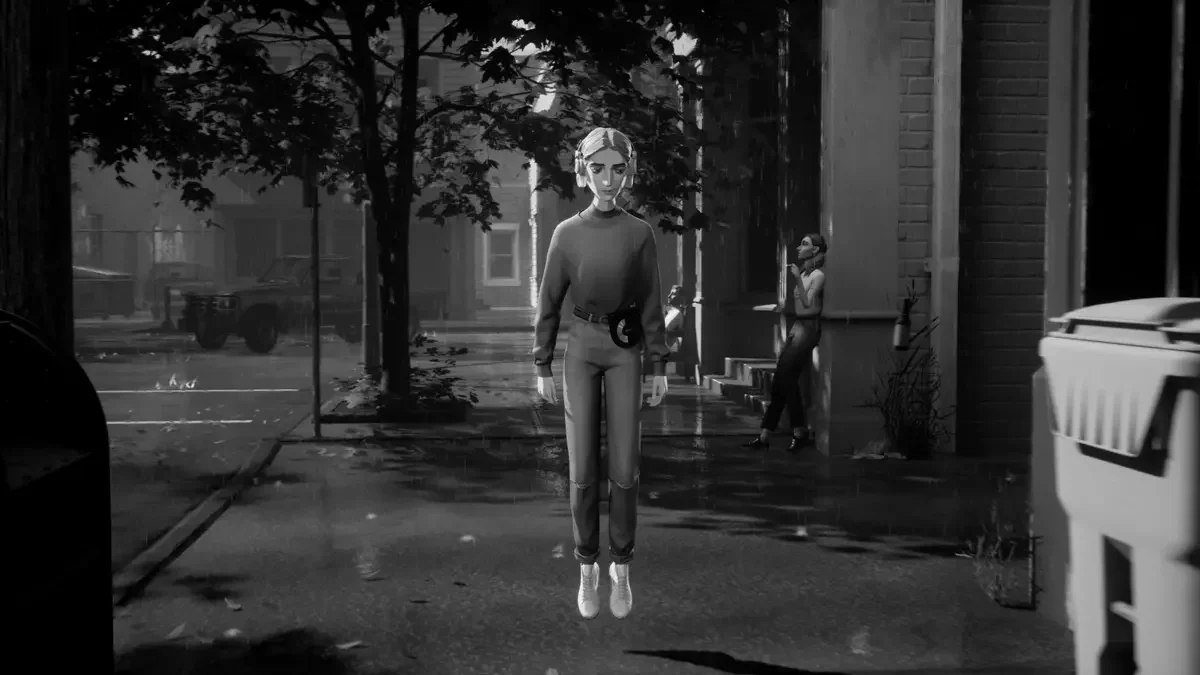
Characters animate at a deliberately lower frame rate while environments stay smooth and fluid, similar to Spider-Man: Into the Spider-Verse. For the first ten minutes I genuinely thought my PS5 was struggling.
Then my brain adjusted.
And honestly? I ended up loving it.
Blue Moon Lagoon feels dreamy without becoming artificial. Bedrooms overflow with tiny lived-in details. Streetlights glow like old memories. Some nighttime sequences look absurdly good.
The stop-motion effect absolutely won't work for everyone though.
A few scenes can look visually messy during fast movement, and certain transitions feel designed backwards from soundtrack moments instead of story beats. The game occasionally disappears so far into its own style that emotional scenes lose momentum.
Still, I'd argue Mixtape succeeds because it commits fully to the bit.
No half measures.
Is Mixtape actually fun to play?
Depends entirely on what you expect from games.
If you want skill trees, deep combat systems, difficult bosses, or endless progression loops, this ain't your thing.
Mixtape is mechanically light on purpose.
Most interactions revolve around:
- Exploration
- Dialogue sequences
- Rhythm moments
- Skateboarding sections
- Environmental minigames
- Interactive memory vignettes
There are basically no fail states.
And honestly, I think that was the right call.
The game wants you relaxed. Present. Hanging inside the atmosphere instead of worrying about rankings, crafting systems, or optimization spreadsheets.
That said, a few sections do feel a little too passive. Some room-exploration sequences drag longer than necessary, especially in the second half. Players who already dislike narrative-heavy indies probably won't suddenly convert here.
But when Mixtape locks in, it really locks in.
I beat the entire thing in one sitting without checking my phone once. That almost never happens anymore.
How long is Mixtape?
Here's the rough breakdown:
| Playstyle | Average Runtime |
|---|---|
| Main story | 3 to 4 hours |
| Exploration heavy | 5 hours |
| Replay run | Around 3 hours |
At $19.99, the length feels fair.
Honestly, I'd rather replay four memorable hours than survive thirty forgettable ones.
The writing feels startlingly real
Teen dialogue in games usually falls into two categories:
- Sanitized Marvel-style quips
- Adults desperately pretending to sound young
Mixtape mostly avoids both.
Characters interrupt each other. Conversations drift sideways. People say dumb things trying to sound smarter than they are. Slater randomly declares he wants to "ride a flaming stallion of delinquency," and somehow it works because everybody commits completely.
The voice acting carries a huge amount of weight here too.
Bella DeLong, Max Korman, and Jessica Ma make the trio feel believable even when the script leans dangerously close to Tumblr-core melodrama.
Which it definitely does sometimes.
But teenagers are melodramatic.
That's kind of the point.
Why Mixtape may become bigger over time
Here's my take.
I actually think Mixtape could grow in reputation the same way Life is Strange, Night in the Woods, and What Remains of Edith Finch did.
Not through giant launch sales.
Through word of mouth.
Games built around emotional memory tend to age unusually well because players project their own experiences onto them. You already see that happening across Reddit discussions and Game Pass conversations. People aren't debating mechanics nearly as much as they're talking about how the game made them feel.
That's usually the sign something sticks.
And Xbox landing this day one on Game Pass feels smart as hell. A lot of players probably would've skipped a short narrative indie at full price. Instead, people are trying it on impulse and leaving genuinely surprised.
"I expected to be underwhelmed but I almost immediately locked in and it's fantastic."
- Reddit u/yesthatstrueorisit
"Mixtape understands EXACTLY what it feels like to be a teenager standing on the edge of the rest of your life."
- Reddit u/Use_a_Potion
Is Mixtape worth playing on Switch 2?
From the footage and early player impressions I've seen, yes.
The stylized visuals help a lot because the game isn't chasing hyper-realistic fidelity. Texture quality drops slightly compared to PS5 and Xbox Series X, but the atmosphere survives intact.
And honestly, this feels like a perfect portable game.
Late at night. Headphones on. Lights off.
Perfect vibe for it.
Bottom Line
Mixtape hit me harder than I expected.
I went in expecting a stylish indie with good music and quirky humor. What I got instead was a surprisingly honest game about the strange grief of growing older.
Not tragic grief.
Just the realization that certain versions of your life quietly disappear one day and never fully come back.
That's what stuck with me.
And yeah, younger players might not connect with every part of Mixtape's pre-social-media nostalgia. But honestly, I think that's exactly what makes it fascinating. Parts of this game already feel like historical fiction.
If you ask me, that's why people are going to keep talking about Mixtape long after launch week fades away.
Play it with headphones. Seriously.
Frequently Asked Questions
How long does Mixtape take to beat?
Is Mixtape on Xbox Game Pass?
Does Mixtape have combat or difficult gameplay?
What songs and bands appear in Mixtape?
Is Mixtape similar to Life is Strange?
Is Mixtape worth buying at full price?
Sources
- theguardian.comhttps://www.theguardian.com/games/2026/may/07/mixtape-review
- forbes.comhttps://www.forbes.com/sites/mattgardner1/2026/05/07/mixtape-review-xbox-the-perfect-soundtrack-for-growing-up/
- powerup-gaming.comhttps://powerup-gaming.com/mixtape-ps5-review/
- sundayguardianlive.comhttps://sundayguardianlive.com/tech-news/mixtape-game-review-2026-check-release-date-storyline-feature-price-game-length-total-playtime-more-189971/
- gosugamers.nethttps://www.gosugamers.net/entertainment/news/78395-review-mixtape-is-a-gorgeous-coming-of-age-story-with-an-exquisite-soundtrack
- cgmagonline.comhttps://www.cgmagonline.com/review/game/mixtape-pc/
- reddit.comhttps://www.reddit.com/r/Games/comments/1t6ac43/mixtape_review_thread/